Andalusia has a reputation for sunshine, dry landscapes, and warm Mediterranean weather. That image is accurate at the coast, but it can become dangerously misleading once you start climbing into the mountains.
The region contains everything from high Sierra Nevada summits above 3,000 metres to the rainy limestone peaks of Sierra de Grazalema and lower Mediterranean ranges near Málaga.
Conditions can vary dramatically over relatively short distances. Sierra Nevada alone has more than 15 peaks exceeding 3,000 metres, where wind, cold, snow, and rapid weather changes are normal features of the high-mountain environment.
Understanding seasonal hiking conditions in Andalusia’s mountains therefore means thinking beyond the usual four-season calendar. Altitude, exposure, rainfall, snowpack, wildfire restrictions, and even the direction a slope faces can matter as much as the month.
The good news is that hiking is possible almost year-round. You simply need to choose the right mountain, elevation, and route for the conditions.
Spring Brings Great Hiking – and Unpredictable Mountain Weather
Spring is one of the best hiking seasons across much of Andalusia.
Lower and mid-elevation trails become greener, wildflowers appear, daylight increases, and temperatures are generally more comfortable than during summer.
Spain’s national tourism authority broadly recommends spring and autumn for hiking because they avoid both mountain snow in some regions and extreme summer temperatures.
But spring does not automatically mean snow-free mountains.
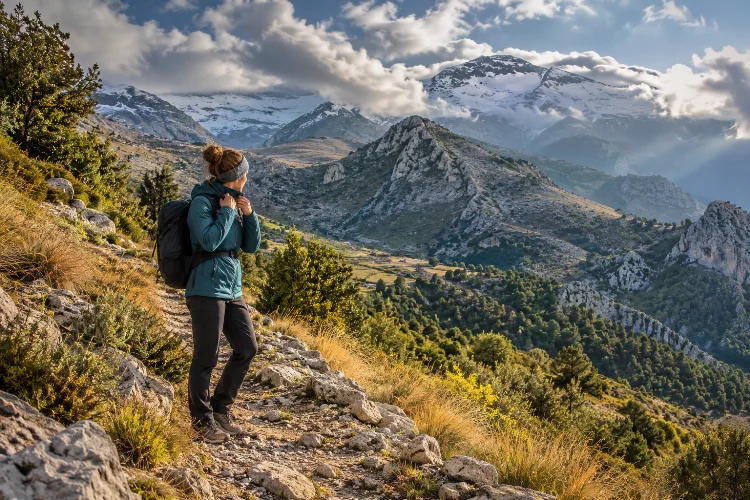
In Sierra Nevada, the highest routes can retain significant snow while Granada and the Alpujarras below are already experiencing warm sunshine. A sunny trailhead can therefore lead toward frozen slopes several hours later.
Snowmelt can also increase stream flow and make river crossings more complicated.
Farther west, Sierra de Grazalema presents a different issue: rainfall. Stormy periods can produce muddy trails, swollen streams, unstable slopes, and temporary closures.
In 2026, for example, official authorities closed several routes after heavy winter storms damaged trails and created risks from flooding and landslides.
Spring is excellent, but always check conditions rather than assuming the calendar has solved every problem.
Summer Requires an Early Start and Smarter Route Selection
Summer is the season when many visitors underestimate Andalusia most.
A clear blue sky may look perfect for hiking, but lower mountains can become extremely hot by afternoon. Shade can be limited, natural water sources may dry up, and exposed limestone or rocky terrain reflects additional heat.
The easiest solution is not simply carrying more water. It is changing how you plan the day.
Start around sunrise for long routes, choose shaded woodland or higher-elevation trails, and avoid committing to exposed climbs during the hottest hours.
Routes near mountain villages can also work well because you can finish before midday and spend the afternoon somewhere cooler.
High Sierra Nevada is a different story. Summer can offer the most accessible conditions for major peaks such as Mulhacén, but strong UV radiation, dry air, altitude, and afternoon storms remain concerns.
Access rules can also change because of wildfire prevention.
For example, the official El Pinsapar trail in Sierra de Grazalema requires authorization, and between June 1 and October 15 it may only be visited with authorized companies.
Some forest tracks in Sierra Nevada also have summer vehicle restrictions connected with wildfire regulations.
So summer hiking is absolutely possible – just do not plan it like a spring walk.
Autumn Is Often the Sweet Spot
If you could choose only one season for general hiking across Andalusia, autumn would be difficult to beat.
Temperatures begin dropping from summer extremes, trails become quieter after the main holiday period, and many inland routes become comfortable again.
Spain’s tourism authority specifically recommends autumn for exploring inland Andalusia as temperatures moderate.
September can still feel very summery at lower elevations, so early starts remain useful.
By October and November, many mid-altitude areas offer excellent walking conditions. Forests and river valleys can be particularly attractive, while visibility on cooler days is often excellent.
The main uncertainty is the return of rain.
After months of dry weather, the first substantial storms can rapidly change trails. Limestone terrain becomes slippery, normally dry channels can carry water, and dirt access roads may deteriorate.
Higher Sierra Nevada also begins transitioning toward winter. A November hike above 3,000 metres may have more in common with early mountaineering than with an autumn countryside walk.
Pack layers even when the valley forcast looks mild.
Winter Turns Sierra Nevada Into Serious Mountain Terrain
Winter creates the biggest contrast between Andalusia’s lowlands and high mountains.
You might drink coffee outside in a sunny town and still see snow covering Sierra Nevada above you.
Spain’s official tourism guide specifically promotes Sierra Nevada as a winter snow destination, reflecting how different its high-altitude climate is from Andalusia’s coastal image.
For hikers, that changes route classification completely.
A summer path that requires little more than sturdy footwear may become covered by hard snow or ice. Steep slopes can require crampons, an ice axe, avalanche awareness, winter navigation, and the experience to use that equipment properly.
If you do not have those skills, winter is not the time to improvise them halfway up Mulhacén.
Fortunately, winter does not eliminate hiking from Andalusia. Lower routes in the Alpujarras, Málaga’s inland mountains, Córdoba, Cádiz, and other areas may have comfortable daytime conditions.
Sierra de Grazalema can also be beautiful, but heavy rain is a genuine factor there.
The key is choosing elevation intelligently rather than abandoning hiking altogether.
Altitude Can Create Several Seasons on the Same Day
One of the most useful rules in Andalusian mountain travel is simple: never judge conditions from the city where you woke up.
Sierra Nevada illustrates this perfectly.
Its highest peaks exceed 3,000 metres, with vegetation and climate changing dramatically as elevation increases. Spain’s park information notes that lower meadows and woodland gradually give way to sparse high-altitude vegetation exposed to cold, wind, and severe weather.
You might begin hiking in a T-shirt near an Alpujarran village and eventually need gloves and a windproof layer higher up.
Temperature is only part of the problem.
Wind chill can make ridges dramatically colder than sheltered valleys. North-facing slopes may retain snow after sunny southern slopes have become dry. Cloud can also reduce visibility quickly above the tree line.
Plan around the highest point of your route, not the warmest point.
This is especially important on a long traverse where turning back after reaching high terrain may still involve several hours of walking.
Sierra de Grazalema Has Its Own Weather Rules
Grazalema deserves special treatment because its climate often surprises people expecting dry southern Spain.
The park’s limestone mountains intercept Atlantic moisture, producing much higher rainfall than many nearby areas. This supports the distinctive vegetation and Spanish fir forests for which the region is famous.
Rain also shapes trail conditions.
Heavy precipitation can produce slippery limestone, saturated soil, flooding in river corridors, and damage to paths.
The current official trail system regularly publishes closures and maintenance notices, which means checking trail status should be part of normal planning rather than an optional extra.
Protected routes may also have seasonal access requirements.
El Pinsapar requires administrative authorization, while Garganta Verde has specific rules and seasonal limitations depending on the activity undertaken.
This does not make Grazalema difficult to visit. It simply means the safest route is sometimes determined by rainfall and conservation regulations rather than personal preference.
That flexibility is part of hiking responsibly in protected landscapes.
Wind and Storms Matter as Much as Temperature
Hikers often check the temperature and ignore everything else.
In the mountains, that is a mistake.
Strong wind can make an exposed ridge uncomfortable or unsafe even when temperatures seem mild. Cloud can erase visibility, while thunderstorms create obvious problems on high summits and open ridges.
Summer storms deserve particular attention in high Sierra Nevada.
A morning may begin perfectly clear before cloud develops later in the day. Starting early gives you additional time to finish exposed sections before afternoon weather becomes more active.
Rain can also make limestone terrain surprisingly slippery.
In places such as Grazalema, wet rock demands slower movement and increases the consequences of minor slips.
Before leaving, check mountain-specific information where possible rather than relying only on a generic city weather app. Look at wind, precipitation, freezing level, cloud cover, and expected weather changes through the entire period you will be outside.
A good weather check tells you more than whether to bring a jacket.
Adjust Your Equipment With the Season
There is no single Andalusian hiking packing list that works all year.
In summer, water capacity, sun protection, breathable clothing, a hat, and an early departure may matter most. Long exposed routes demand significantly more water than shaded valley walks.
Spring and autumn call for flexible layering.
A lightweight insulated layer and waterproof shell can be worth carrying even when your trailhead feels warm. Conditions higher up may be completely different.
Winter equipment depends on altitude.
For a low-level village walk, ordinary hiking gear may be sufficient. For snow-covered high mountains, the requirements can shift into proper mountaineering equipment.
Navigation should remain consistent throughout the year.
Download offline maps, carry enough battery power, and know how to find an alternative route without mobile coverage. A trail that looks obvious in summer can disappear completely beneath snow or thick cloud.
And do not forget the humble headlamp. Short winter days and unexpected delays make it far more useful than its tiny weight suggests.
Check Official Trail Notices Before Every Major Hike
Seasonal conditions are not limited to weather.
Protected-area managers may restrict routes because of wildfire risk, conservation, storm damage, snow, ice, flooding, or maintenance. Sierra Nevada and Sierra de Grazalema both publish official visitor information covering trails and access.
A route described in a two-year-old blog may no longer be accessible under the same conditions.
Check again shortly before leaving, especially after major storms.
This became particularly obvious in Grazalema during 2026, when storm damage led to temporary trail closures because of damaged surfaces, high water, slope instability, and falling trees.
Build an alternative into your plan.
If your main route closes or the weather turns bad, having a lower, shorter option means you can still enjoy the day rather than taking unnecessary risks.
That small habit makes mountain travel much more relaxed.
Understanding seasonal hiking conditions in Andalusia’s mountains is mostly about recognizing how diverse the region really is.
Spring and autumn provide some of the easiest general walking conditions, but spring snow and autumn storms still affect higher ground.
Summer demands heat management, early starts, and awareness of wildfire restrictions. Winter can offer excellent lower-level hiking while turning Sierra Nevada’s high peaks into serious alpine terrain.
Altitude adds another layer, allowing warm valleys and snowy summits to exist surprisingly close together.
Before every substantial hike, check the weather, official trail notices, elevation, water availability, and seasonal restrictions. Then be willing to change the route.
Andalusia offers fantastic hiking throughout much of the year – the trick is not waiting for one “perfect” season, but choosing the right trail for the season you have.