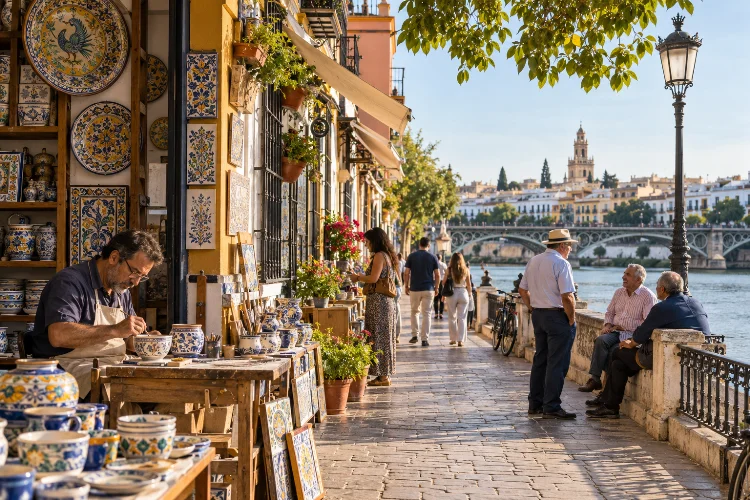
Mention Triana to many travelers and flamenco is usually the first thing that comes to mind. That connection is real and important, but reducing this historic Seville neighborhood to music and dance means missing a much bigger story.
Learning how to experience Triana’s cultural heritage beyond flamenco reveals generations of potters, sailors, market traders, religious brotherhoods, craftspeople, and families whose lives were shaped by the Guadalquivir River.
Triana developed on the opposite bank from Seville’s historic center, giving it a distinctive identity that locals still proudly defend today.
Seville’s tourism authority describes it as a traditional home of potters, sailors, bullfighters, and artists, with roots reaching through Roman, Islamic, medieval, and modern periods.
The best way to understand Triana is therefore not to rush between attractions. Cross the river, slow down, explore its workshops and markets, enter its churches, and pay attention to the everyday streets where heritage is still part of local life.
Start by Crossing the Triana Bridge
Your introduction to Triana should begin before you technically enter the neighborhood.
Walk across the Isabel II Bridge, better known as Puente de Triana. Completed in 1852, it replaced the centuries-old bridge of boats that had previously connected the western bank of the Guadalquivir with central Seville.
Its iron construction was inspired by the former Pont du Carrousel in Paris and represented an important piece of 19th-century engineering.
Stop halfway across rather than walking straight through.
From here, the relationship between Triana and the river becomes much easier to understand. For centuries, the Guadalquivir influenced transport, commerce, crafts, fishing, maritime activity, and the physical separation between Triana and central Seville.
Once you reach Plaza del Altozano, look back toward the historic skyline. That change in perspective helps explain why Triana has always felt connected to Seville while maintaining its own neigborhood identity.
Discover Why Ceramics Define Triana
Flamenco may be Triana’s most internationally recognizable cultural export, but ceramics are literally built into the district.
The area’s pottery tradition developed over many centuries, benefiting from clay resources around the Guadalquivir Valley.
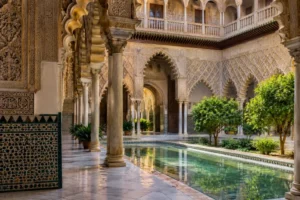
During the Islamic period, ceramic production became particularly sophisticated, with glazing and decorative techniques eventually influencing façades, floors, patios, churches, and palaces throughout Seville. Mudéjar craftsmen later adapted many of these traditions.
The best place to explore this history is the Centro Cerámica Triana, located in the former Santa Ana ceramics factory. Original kilns, tools, molds, historic pieces, and archaeological remains help explain how pottery moved from raw clay to finished tiles and decorative objects.
The museum also provides useful context for something you will notice afterward: ceramics are everywhere.
Walk around Calle Alfarería, Calle Antillano Campos, and nearby streets and look at tiled street signs, shopfronts, façades, religious images, and decorative panels. Suddenly, what looked like decoration becomes evidence of a working traditonal industry.
Experience Everyday Life at Mercado de Triana
Markets tell you a lot about how a neighborhood actually lives.
Mercado de Triana sits beside Plaza del Altozano, making it an easy stop immediately after crossing the bridge.
Inside, traditional produce stalls share the space with food counters and newer gastronomic businesses, creating a mixture of everyday shopping and visitor-friendly dining.
Its location, however, adds another historical dimension.
The market stands over the remains of Castillo de San Jorge. A market was established on the site in the 19th century after much of the old castle had been demolished, while archaeological remains became visible again during later redevelopment.
Visit in the morning if you want to see more of its traditional market character. Instead of treating it simply as somewhere to grab lunch, spend time watching which products locals buy and how vendors interact with regular customers.
Food culture is heritage too, especially when it continues through ordinary routines rather than staged demonstrations.
Look Beneath the Market at Triana’s Darker History
Triana’s cultural story is not entirely colorful tiles and riverside cafés.
Beneath the market are remains connected with Castillo de San Jorge, an earlier fortress that later became closely associated with the Spanish Inquisition.
The site served for long periods as the headquarters of the Inquisition tribunal in Seville, giving this corner of Triana a much darker historical significance.
That history matters because heritage tourism can easily become selective. Neighborhoods are often presented through their most attractive traditions while uncomfortable chapters disappear from the story.
At the time of the latest official tourism information, the archaeological site itself is closed, while the building’s lobby functions as a tourist information point. Access conditions can change, so check before planning your visit.
Even without entering, knowing what lies beneath the modern market changes how you experience Plaza del Altozano. One small area contains layers of Islamic fortification, religious persecution, commerce, archaeology, and contemporary neighborhood life.
Step Inside Santa Ana and Read Triana’s Architecture
For another side of Triana’s identity, walk toward the Parish Church of Santa Ana.
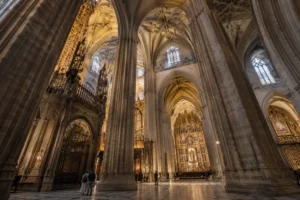
Founded under Alfonso X in the 13th century, the church is regarded as one of Seville’s oldest Christian temples after the Castilian conquest. Its Gothic-Mudéjar character combines Christian architectural forms with artistic traditions that developed from Islamic Iberia.
Locals sometimes call it the “Cathedral of Triana,” which gives you a sense of its symbolic importance.
Inside, look beyond individual religious artworks and pay attention to the building itself. Gothic elements, later Renaissance decoration, chapels, traditional tilework, and subsequent restorations show how one religious space can accumulate centuries of cultural change.
Santa Ana also remains connected to community festivals and devotional traditions. This is important: you are not visiting an abandoned monument but an active religious building.
That distinction turns architechture into living heritage rather than museum scenery.
Follow the Guadalquivir and Triana’s Maritime Past
After exploring the interior streets, return toward the river.
Triana’s relationship with maritime life was historically important.
Seville’s tourism authority notes that sailors connected with major Atlantic expeditions came from or trained around the district, and Triana participated in the wider maritime culture surrounding voyages such as the Magellan-Elcano circumnavigation.
Walk along Calle Betis to experience the river geographically rather than only reading about it.
Today the waterfront is known for colorful façades, restaurants, terraces, and impressive views toward central Seville. Historically, however, the Guadalquivir represented employment, transportation, danger, flooding, trade, and connection with a much larger world.
Try visiting early in the morning when the riversde area feels calmer.
Without the busiest evening crowds, it becomes easier to imagine Triana as a working waterfront rather than simply one of Seville’s most photogenic places.
Explore the Smaller Streets Where Local Identity Survives
Some of Triana’s strongest cultural character exists between the recognized attractions.
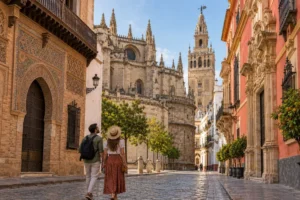
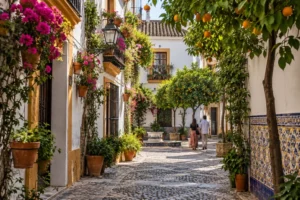
Walk along Calle Pureza, San Jacinto, Castilla, Alfarería, and the streets connecting them. You will find bakeries, small stores, bars, churches, ceramic details, family businesses, and ordinary apartment buildings that rarely appear on must-see itineraries.
This is where it helps to stop searching constantly for “things to see.”
Triana’s heritage is partly about community identity. The district historically developed outside Seville’s walls and on the opposite side of the river, encouraging a strong sense of local belonging that continues to shape its reputation.
Spend an hour walking without a strict route. Have coffee somewhere away from the main tourist corridor, notice old storefronts, and look for religious ceramic panels attached to buildings.
The experiance becomes much richer when the neighborhood itself – not a particular monument – is the attraction.
Time Your Visit Around Local Traditions
If your travel dates are flexible, local festivals can add another layer to understanding Triana.
One of the most significant is the Velá de Santiago y Santa Ana, a summer celebration associated with Saint Anne and deeply connected with the neighborhood and river. The tradition stretches back centuries and is usually centered around the July feast period of Saint Anne.
Religious processions and neighborhood festivities also show how historic customs continue to occupy public streets.
However, you do not need to visit during a major event to encounter local traditions. Churches, food markets, workshops, neighborhood bars, ceramic decoration, and everyday social routines provide cultural context throughout the year.
The key is to approach these traditions respectfully rather than treating them as performances created for visitors.
Give Triana Enough Time
Triana is close enough to Seville’s historic center that travelers sometimes squeeze it into an hour between major attractions.
That is possible, but it defeats the purpose.
Give yourself at least half a day if you want to understand the district beyond flamenco.
A comfortable route can begin at Puente de Triana, continue through Mercado de Triana and the ceramics quarter, reach Santa Ana, wander the residential streets, and eventually return along Calle Betis.
Avoid scheduling every minute.
A ceramic workshop that catches your attention, an unexpectedly beautiful tiled doorway, or a crowded neighborhood café may tell you more about Triana than another item on a checklist.
Its heritage works best when discovered slowly.
Understanding how to experience Triana’s cultural heritage beyond flamenco means seeing the neighborhood as a living collection of crafts, faith, maritime history, architecture, food, and community traditions.
Cross the historic bridge, learn how Triana’s kilns shaped Seville’s ceramic identity, explore the market, understand the difficult history beneath Castillo de San Jorge, visit Santa Ana, and walk beside the Guadalquivir.
Then leave enough time to wander streets where everyday neighborhood life continues around you. Flamenco remains an essential part of Triana, but it is only one chapter.
On your next visit to Seville, resist the temptation to cross the river for a quick photo and leave. Spend half a day walking slowly through Triana, and you will discover one of the city’s richest cultural landscapes.